


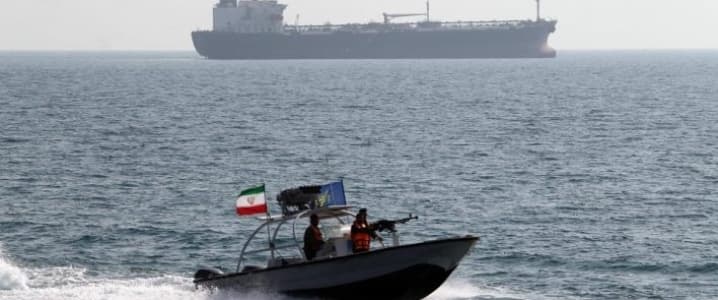
South Korea To Send Navy Unit To Guard Oil Shipping In Strait Of Hormuz
One of Asia’s key oil importers, South Korea, is preparing to send a naval unit, including a destroyer, to the Strait of Hormuz to help protect free tanker movement through the crucial oil transit point in the Middle East, South Korea’s Maekyung business newspaper reported on Monday.
South Korea has decided to deploy its anti-piracy unit Cheonghae, currently in the Gulf of Aden off Somalia, to the Strait of Hormuz, where the naval unit could be joined by helicopters, according to a senior South Korean government official who spoke to the Maekyung newspaper.
The Strait of Hormuz is the most important oil chokepoint in the world with daily oil flows averaging 21 million bpd, or the equivalent of 21 percent of global petroleum liquids consumption. According to EIA estimates, 76 percent of the crude oil and condensate that moved through the Strait of Hormuz last year went to Asian markets, with China, India, Japan, South Korea, and Singapore the top destinations.
Several high-profile incidents in recent weeks and months have raised the tensions between Iran and the West in the Middle East, the latest being Iran’s seizure of a British-flagged oil tanker earlier this month, in what appears to be in retaliation for the seizure of an Iranian oil tanker by Gibraltar, with the help of the UK Royal Marines, in the beginning of July.
South Korea is exploring various way to protect its ships in the Strait of Hormuz, Reuters quoted deputy ministry spokesman Ro Jae-cheon as saying at a press conference on Monday.Related: Natural Gas Glut Is Crushing US Drillers
Khalid al-Falih, the energy minister of the world’s largest crude oil exporter and OPEC’s biggest producer, Saudi Arabia, urged last week countries buying crude oil to secure the free navigation of tankers in the Strait of Hormuz.
Also last week, U.S. Secretary of State Mike Pompeo said in an interview with FOX News, referring to international efforts to secure free tanker navigation in the Strait of Hormuz:
“We’ve asked the Brits, the French, the Germans, the Norwegians, the Japanese, the South Koreans, the Australians – I’m sure I missed a few. Every country that has an interest in ensuring that those waterways are open and crude oil and other products can flow through the Straits of Hormuz needs to participate to protect not only their own interests, but the fundamental understanding of free and open waterways.”